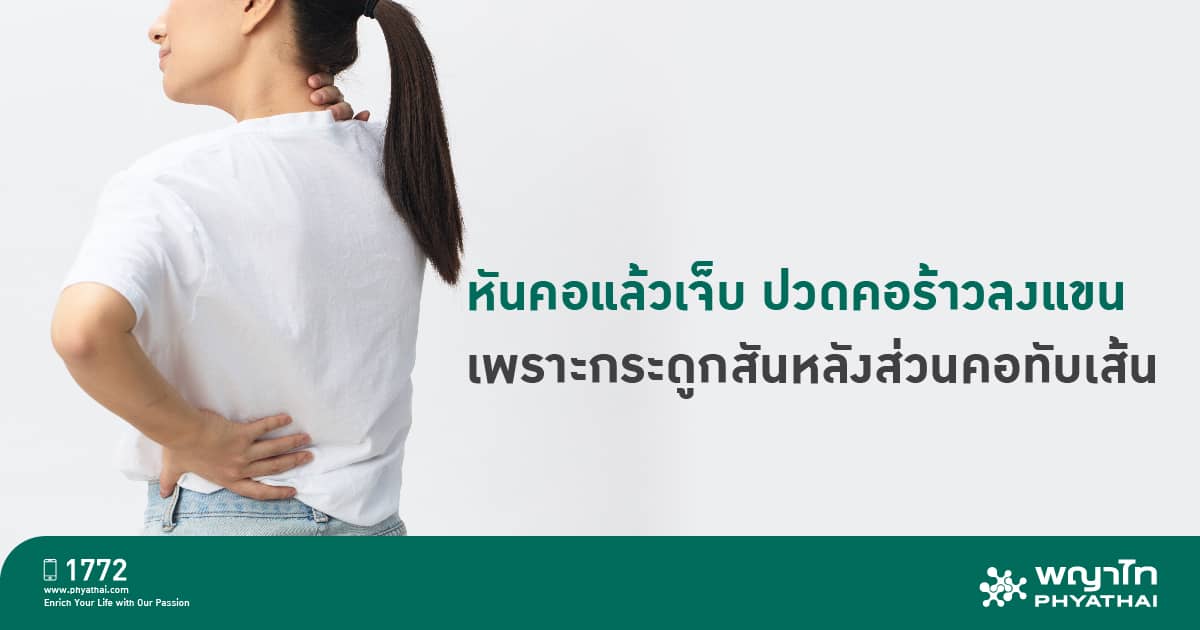
Many people may have only heard of the disease ‘herniated disc pressing on the nerve’ and are not very familiar with ‘cervical spine pressing on the nerve’, which in fact, the chances of both diseases occurring are not much different from each other.
The cervical spine… is a highly mobile organ
Generally, the cervical spine moves more than 500 times per hour, which means heavy usage. Moreover, if we move or perform heavy, risky activities with incorrect posture, it will cause more degeneration of the neck than it should be. For elderly people with cervical spine nerve compression, it not only causes pain and inability to move the neck but may also cause numbness and weakness in the arms and legs.
What symptoms? Warning signs of cervical spine nerve compression
- Stiff neck, difficulty moving and turning
- Neck pain that worsens with movement
- Neck pain radiating down the arm
- Weakness in the arm accompanied by numbness
Signs to watch for that may indicate a risk of cervical spine nerve compression include inability to turn or twist the neck easily, feeling stiff, pain that worsens when forcing the neck to turn, along with pain radiating down the arm, numbness, or arm weakness. If you experience these symptoms, you should consult a doctor immediately.
Surgical treatment for cervical spine nerve compression
There are several treatment options for cervical spine nerve compression, depending on the severity of the condition. If symptoms are not severe, treatment can include physical therapy, massage and hot compresses to relieve pain, along with medication and the use of devices to relax neck muscles.
However, if diagnosed with severe symptoms such as numbness and weakness in the arms and legs, this is a dangerous sign that requires urgent surgical treatment. An MRI is performed to diagnose and locate the injury, followed by surgery to relieve the nerve compression. Currently, an effective surgical option for cervical disc herniation pressing on the nerve is called Anterior Cervical Discectomy. This minimally invasive surgery uses a high-magnification microscope to remove the herniated disc pressing on the nerve and insert a replacement material to fuse the cervical vertebrae. The materials used today are divided into two types:
- Non-movable artificial disc (Anterior Cervical Discectomy and Fusion)
This type of disc is used to fuse the vertebral joints, preventing any movement at the fused segment. The advantage is easy insertion and lower cost, but the disadvantage is that it is not natural and carries a risk of adjacent segment degeneration.
- Movable artificial disc (Total disc replacement)
This type of disc allows movement similar to a natural disc, reducing the risk of adjacent segment degeneration, but it is more expensive and more difficult to implant.
The choice of material depends on several factors, including the patient’s age and the pathology of the disease.
What are the advantages of cervical spine surgery using a microscope?
- The surgical incision is small, about 3 cm, or slightly larger if surgery is performed on more than one level, but still considered a small wound
- Small opening causes less pain, less blood loss, and a high success rate
- Reduces complications during surgery
- Faster recovery, reducing the cost of convalescence
- Quick healing, earlier discharge, and faster return to normal activities
Behavioral changes to strengthen cervical spine health
Since the main cause of cervical spine degeneration is behavior and usage, adopting proper posture in daily life can reduce the risk of cervical spine nerve compression. It is also advisable to avoid the following behaviors:
- Stop sitting in front of the computer in the same position for long periods without changing posture
- Avoid using pillows that are too high or stop using high pillows to reduce neck strain
- When walking, sitting, or running, keep the neck and head straight without frequently bending or tilting the head
- Avoid bending the head down to read or perform activities for long periods; instead, raise the book to eye level
- The car seat should not be too far from the steering wheel, as tensing the neck and shoulders while driving increases neck strain
“The neck” is a very important organ in our lives. Imagine if we cannot turn our necks easily and every time we turn it hurts, how can we live happily? Therefore, it is important to focus on behavioral changes, regularly exercise the neck to keep it strong, and monitor for abnormal symptoms to protect ourselves from cervical spine nerve compression. With a strong body, we can live happily, study, work, and take care of our families according to our dreams and goals to the fullest.
Dr. Teerachai Phanitpong
Neurosurgeon, Brain and Spine Center
Brain and Spine Center
Phyathai 3 Hospital
