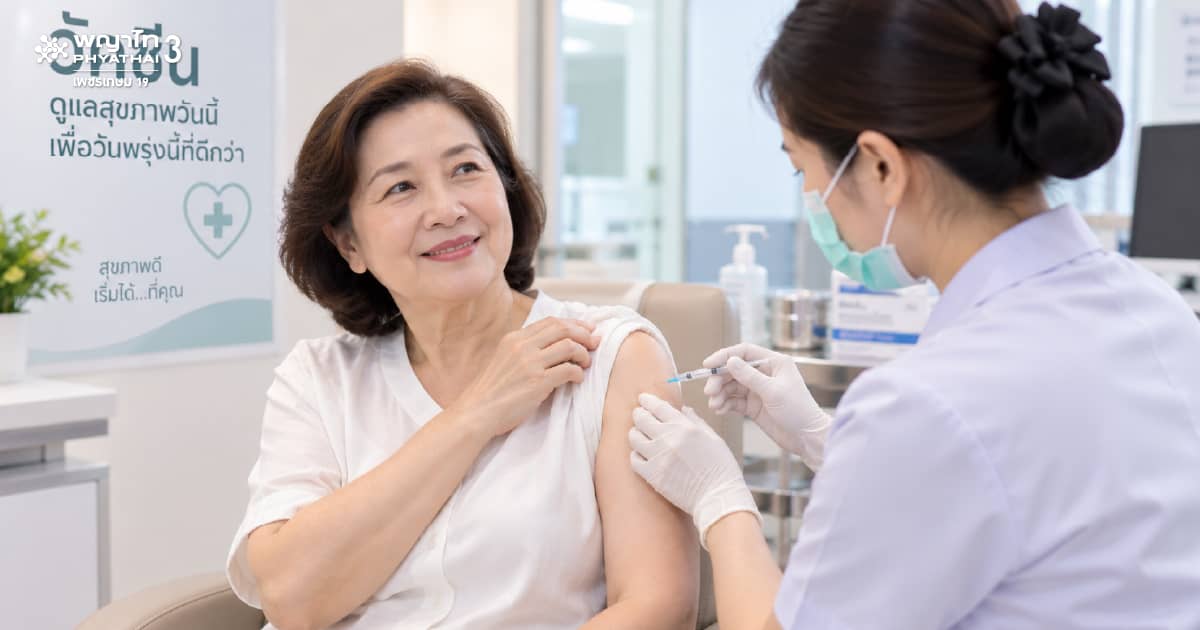
Shingles Vaccine for Ages 50+: Up to 97% Protection, One Course of Vaccination, Peace of Mind for More Than 10 Years
Many people may have heard that shingles is extremely painful and debilitating, and this is by no means an exaggeration. Shingles is a disease that remains dormant in the bodies of people who have previously had chickenpox and can erupt again when the body’s immune system becomes weakened, especially in older adults. However, there is now a shingles vaccine with an efficacy of up to 97%.
For a better quality of life in the future, receiving the shingles vaccine is another option that can help prevent pain. What is shingles, and how necessary is the shingles vaccine? Learn the detailed information before getting vaccinated.
Getting to Know Shingles
Shingles is caused by a virus called Varicella-Zoster Virus (VZV), the same virus that causes chickenpox. After recovering from chickenpox, this virus does not completely leave the body but remains dormant in the nerve ganglia without causing any symptoms.
Whenever the body becomes weak or immunity declines—whether due to aging, accumulated stress, inadequate rest, or the use of certain medications—the dormant virus can reactivate and spread along the nerves, causing shingles symptoms. This disease can occur in anyone who has had chickenpox, and the risk increases further after the age of 50.
Symptoms of Shingles
Shingles symptoms usually begin with discomfort in a particular area of the skin. In general, the progression of the disease can be divided into the following stages:
- Stage 1 Headache and body aches
- Stage 2 Blisters develop, accompanied by burning pain, itching, or sharp, tingling pain in the skin along the nerves. A red rash appears in the painful area. The blisters rupture into sores, then gradually dry and eventually form scabs.
- Stage 3 Chronic pain persists even when there are no longer any lesions. In some cases, recurrence may occur (an average of 3.9%) in people aged 45 and older, or some individuals may develop complications such as vascular or neurological complications.
Complications of Shingles
Shingles is not merely an ordinary skin rash. It can lead to serious complications that significantly affect quality of life, especially in older adults. Important complications include:
- Postherpetic Neuralgia (PHN)
This is the most common complication, occurring in approximately 10–15% of all shingles patients and in as many as approximately 85% of patients over the age of 50.
Patients with PHN experience burning, searing, or sharp, stabbing pain similar to being stabbed with a knife in the area where the rash occurred, even after the rash has disappeared. The pain may continue for months or even years, causing insomnia, difficulty carrying out daily activities, and subsequent depression.
- Eye complications (Herpes Zoster Ophthalmicus)
If shingles occurs on the face near the eyes, it may cause corneal inflammation and affect vision. In severe cases, it may result in permanent vision loss. This condition may occur in up to 10–15% of cases. - Neurological complications
These include meningitis, encephalitis, or partial paralysis, because the virus may spread to the blood vessels of the brain. - Cerebrovascular complications
Ischemic stroke may occur due to inflammation of the blood vessels.
Prevention of Shingles
Shingles can be prevented in several ways, beginning with basic health care, including:
- Maintaining good health Get adequate sleep and rest, eat nutritious food, and exercise regularly to maintain the body’s immune function.
- Managing stress Chronic stress is an important trigger that weakens the immune system and increases the risk of disease reactivation.
- Avoiding close contact with someone who has shingles Especially while clear blisters are still present, as the virus can be transmitted to others.
However, the most effective and medically accepted preventive measure is shingles vaccination, which can effectively reduce the risk of developing the disease, lessen the severity of symptoms, and prevent serious complications.
The Shingles Vaccine Helps Prevent the Disease
The shingles vaccine commonly used today is Shingrix, a newer-generation vaccine approved by Thailand’s Food and Drug Administration in 2023.
This vaccine does not contain live virus. Instead, it is produced from a specific viral protein called glycoprotein E, which is genetically engineered and combined with an immune-stimulating adjuvant system (Adjuvant System AS01B) to enhance the immune response. As a result, the shingles vaccine is clearly more effective and provides longer-lasting protection than earlier-generation vaccines.
Efficacy of the RZV (Shingrix) Vaccine
- Provides 97.2% protection against shingles in people aged 50 and older
- Provides 91.3% protection against shingles in people aged 70 and older
- Provides 100% protection against postherpetic neuralgia (PHN) in adults aged 50 and older
- Continues to provide 79.8% protection against shingles over a period of 5–11 years and 87.7% over 11 years after completion of the 2-dose series
How Is the Shingles Vaccine Administered?
The RZV (Shingrix) vaccine is administered intramuscularly into the upper arm (deltoid muscle), at a dose of 0.5 mL per injection. It should not be injected into a blood vessel or under the skin. It should only be administered by a physician or professional nurse at a medical facility.
Things to Know Before Vaccination
- Testing for immunity (Varicella IgG) is not necessary beforehand. The vaccine can be administered regardless of whether or not you have previously had chickenpox.
- If you currently have shingles, you must complete treatment and recover before receiving the vaccine.
- If you have had shingles before, you can receive the vaccine after waiting at least 6 months following recovery from shingles.
How Many Doses of the Shingles Vaccine Are Needed?
The RZV (Shingrix) vaccine requires a complete 2-dose series to achieve maximum protection. The interval between doses varies according to the recipient group, as follows:
| Vaccine recipient group | Number of doses | Interval between doses |
| Adults aged 50 and older (general population) | 2 doses | 2–6 months apart |
| People aged 18 and older with immunocompromising conditions | 2 doses | 1–2 months apart |
Note: If the second dose is administered less than 4 weeks after the first dose, the vaccination should be repeated.
Who Should Receive the Shingles Vaccine?
Thai medical organizations and clinical practice guidelines recommend that people in the following groups receive the shingles vaccine:
- All adults aged 50 and older as they have the highest risk of developing the disease and serious complications
- People at particularly high risk (aged 18 and older)
- People with immunodeficiency caused by a disease or medication
- Patients taking steroids or immunosuppressive medications
- People undergoing chemotherapy or radiation therapy
- Patients with diabetes
- Patients with chronic kidney disease
- Patients with chronic lung disease
- Patients with cardiovascular disease
- People living with HIV
- Patients with cancer or blood disorders
People who previously received the older vaccine (ZVL/Skyzoster) can receive the RZV (Shingrix) vaccine, provided that at least 2 months have passed since the older vaccine, to further enhance protection. People who have previously had shingles can also receive the vaccine, as recurrence is possible, provided that at least 3–6 months have passed since recovery from shingles.
People Who Should Take Precautions When Receiving the Shingrix Vaccine
Although the RZV (Shingrix) vaccine is highly safe, certain people should avoid vaccination or consult a doctor before receiving it, including:
- People with a history of severe allergic reactions (anaphylaxis) to any vaccine component, including those who have previously had an allergic reaction to an earlier chickenpox vaccine
- Pregnant women RZV vaccination is not recommended during pregnancy. It should be postponed until after delivery. (There is no contraindication for breastfeeding women.)
- People who are currently experiencing shingles They should complete treatment and recover before scheduling vaccination.
- People with a high fever or acute illness They should wait until they have fully recovered.
The Shingrix shingles vaccine is a non-live vaccine and is therefore safe for people with immunodeficiency, unlike the previous live vaccine, which was contraindicated in this group. However, you should consult a doctor before receiving any vaccine.
Possible Side Effects After Vaccination
Side effects after receiving the RZV vaccine are usually mild and resolve on their own within 2–3 days. Common side effects include:
- Pain, swelling, or redness at the injection site
- Muscle aches and fatigue
- Headache
- Chills
- Low-grade fever
- Gastrointestinal symptoms such as nausea and abdominal pain
These symptoms are usually a good sign, indicating that the body is developing immunity. If symptoms persist for more than 2–3 days or are severe, seek medical attention promptly.
Recommendations After Receiving the Shingles Vaccine
For maximum safety and effectiveness after receiving the shingles vaccine, follow these recommendations:
- Stay seated and monitor your condition for at least 15–30 minutes after vaccination so that medical personnel can assist you if any abnormal symptoms occur.
- During the 2–3 days after vaccination, if you experience pain or swelling and redness at the injection site, you may apply a cold compress and take pain medication as directed by your doctor.
- Avoid overly strenuous activities on the first day after vaccination.
- Drink enough water and get additional rest.
Note: Schedule the second dose as recommended (2–6 months apart or according to your doctor’s advice). Completing the 2-dose series is extremely important for developing effective immunity.
Summary: The Shingles Vaccine Reduces the Risk of Developing Shingles
Shingles is not simply a disease that causes an itchy rash and then goes away. It can cause the suffering of nerve pain that may last for years, as well as other serious complications, especially in older adults aged 50 and above.
The shingles vaccine, particularly the newer Shingrix vaccine, is considered the most effective tool currently available for preventing the disease and its complications, and it can provide protection for more than 10 years. Vaccination is therefore a worthwhile investment in your health, reducing pain and medical expenses while helping maintain quality of life in the long term.
If you or a family member is aged 50 or older or belongs to a high-risk group, you should consult a doctor for advice and make plans to receive the shingles vaccine as soon as possible, because prevention is always better than treatment.
Dr. Supitcha Ongkittikul (License No. 35222)
Infectious Disease Specialist
Phyathai 3 Hospital
