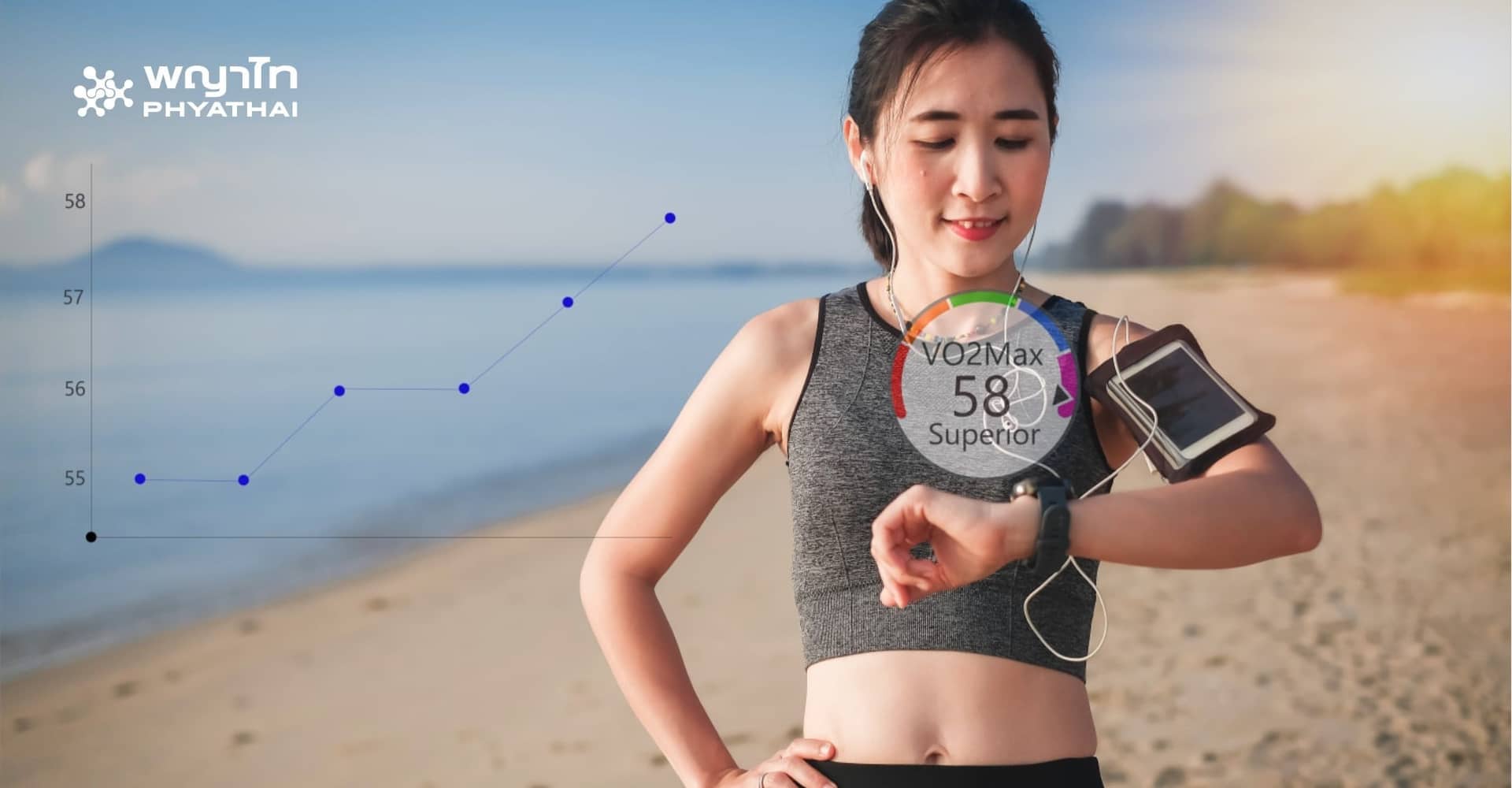
Cardio Pulmonary Exercise Test (CPET) is a test that evaluates the performance of the heart and lungs simultaneously using technology that measures the body’s maximal oxygen consumption during exercise (VO2Max). It can quantify the heart and lung output as numerical values, report the maximum heart rate during exercise, the maximum breathing rate during full exercise, and the volume of air used for breathing during full exercise. The calculations are precise, giving us more confidence in exercising.
What is Vo2 Max and why is it important…?
Maximal Oxygen Consumption or VO2 max is the maximum rate of oxygen usage by the body during exercise. This value reflects the fitness level of the person being tested at that time. It can be assessed by exercising and measuring the gases the person breathes in and out. The VO2 max value also reveals the response of the metabolic system, respiratory system, heart rate, heart rate zones and training plans, running speed, and blood vessels during exercise. This means the higher the value, the fitter and stronger the person is.
Who is it suitable for?
- Amateur runners preparing for major races and wanting to plan appropriate training
- People who exercise regularly
- Professional athletes who want to plan training to push their limits
- People who have not exercised for a long time and want to start exercising again
- Elderly people, at-risk patients, or those who have had heart failure
- People with respiratory and lung problems
- People who are obese or have a BMI over 23
Test procedure
The test is commonly performed by running on a treadmill or cycling on a stationary bike, depending on the preference of the person being tested. A mask is worn to measure the gases breathed in and out, a chest strap is used to measure heart rate, and electrodes are attached to measure the electrocardiogram (EKG 12 leads). The test takes approximately 30 minutes, followed by a 30-minute consultation with a doctor to summarize the results. The test is divided into 4 steps as follows:
- Stand or sit still, breathing normally to assess the baseline condition before exercise
- Start walking or cycling lightly to warm up
- When the test begins, the machine will increase the exercise intensity according to the test program. While walking or cycling, heart rate, electrocardiogram, and symptoms are continuously recorded
- The person exercises to their maximum effort level. After reaching maximum effort, the doctor will slow down the machine, but the person must continue walking or cycling slowly until the machine stops. The doctor will continue to record the electrocardiogram and measure blood pressure periodically for 3-5 minutes or longer if abnormalities are detected
Medical indications for VO2 Max testing
- Classifying patients by risk and prognosis, such as in patients with heart failure, to assess readiness before surgery
- Used in conjunction with exercise program planning for various patient groups such as DM, HT, DLP, CAD
- Used to evaluate treatment outcomes
- Used to measure exercise capacity or assess physical fitness
- Used to diagnose and differentiate causes of fatigue or breathing difficulties
The Cardio Pulmonary Exercise Test (CPET) is an important test for evaluating the performance of the heart and lungs by measuring VO2 Max, which reflects the body’s fitness. It helps you understand your limits so you can exercise appropriately and plan training development to push your limits correctly and effectively. The Heart Center at Phyathai Phaholyothin Hospital is ready to provide care before, during, and after the test under the supervision of a multidisciplinary team with expertise, including cardiologists, physical therapists, sports medicine specialists, and dietitians who are ready to provide care, advice, and help design personalized exercise programs.
Dr. Nithi Sammachip Wisawakul
Cardiologist
Phyathai Phaholyothin Hospital
