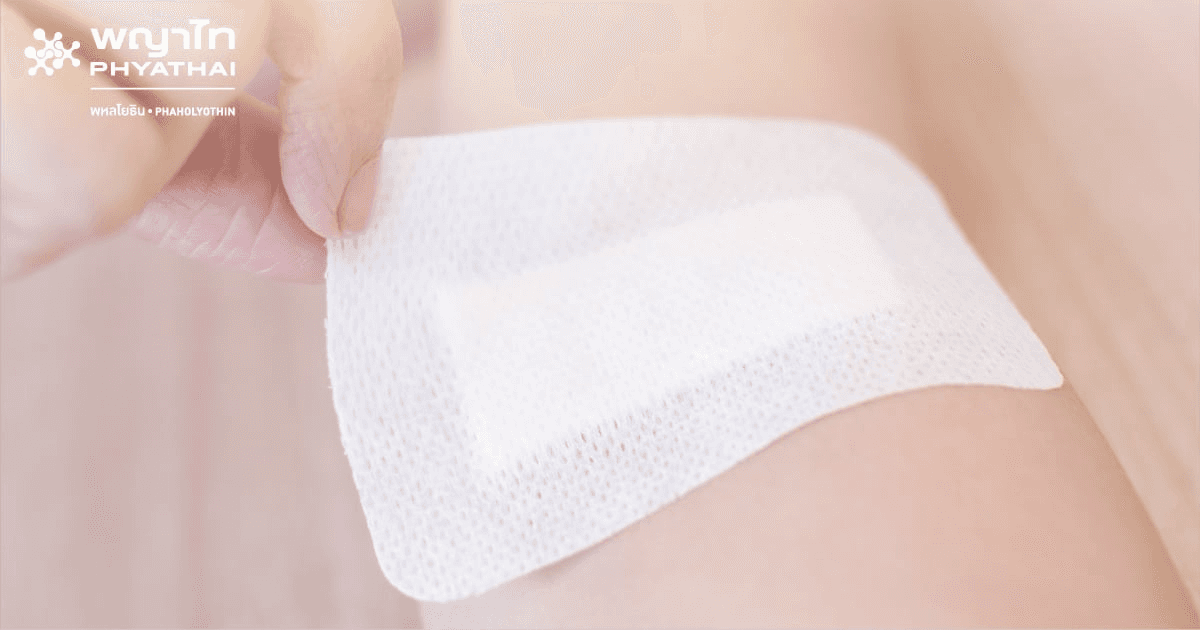
Proper wound care must consider the type, characteristics, size, and depth of the wound to promote fast healing and reduce the risk of complications such as infection and scarring. For fresh wounds, focus on cleanliness and infection prevention, while for slow-healing or chronic wounds, emphasize scar prevention. The first thing not to overlook is proper wound cleaning.
Steps for Proper Wound Cleaning
Proper wound cleaning plays a significant role in ensuring good, fast healing and preventing infection. The steps are as follows:
- Wash hands thoroughly with water and soap or use an alcohol gel with a concentration of at least 60%.
- Prepare equipment such as gauze, saline solution for wound cleaning (9% Normal Saline), cleaning tools, and medical gloves.
- Wear medical gloves to prevent direct contact with the wound and reduce the risk of infection.
- Clean around the wound using gauze soaked in saline, then wipe around the wound with 70% alcohol. Do not wipe directly on the wound as it may damage the tissue.
- Use saline by pouring or using gauze to wipe or gently rinse, starting from the inside of the wound outward to prevent germs from the skin from contacting the wound.
- Use gauze or a clean, lint-free cloth to gently dry the wound.
- If wound ointment is needed such as antiseptics or scar-reducing ointments, follow the doctor’s instructions.
- Use gauze or a bandage to firmly cover the wound. Avoid using cotton wool as it may be difficult to remove, cause trauma to the wound, and pain when taken off.
- After cleaning the wound, dispose of used equipment in a tightly covered trash bin and wash hands thoroughly again.
Choosing Antiseptics
Choosing antiseptics should be based on the wound’s characteristics and type to maximize treatment effectiveness as follows:
- Fresh wounds and abrasions use Mercurochrome or Povidone-Iodine but be cautious when using on sensitive skin as it may cause irritation.
- Chronic or ulcerated wounds use Acriflavine, which may have less antimicrobial effectiveness and slower action.
- Pus-filled wounds or necrotic tissue use 3% hydrogen peroxide to clean the wound and help remove dead tissue. It should only be used in the early stages of wound care to dissolve dead tissue but not continuously as it may damage new tissue formation.
- Wounds at risk of infection use 70% alcohol to wipe around the wound to prevent infection. Currently, there are antiseptics that are effective and do not damage tissue such as Octenidine, Polihexanide, Povidone-Iodine, Sodium Hypochlorite, and Nanosilver.
How to Choose Equipment and Dressings Suitable for Each Type of Wound
To promote fast healing and reduce the risk of infection, choose equipment and dressings as follows:
- Wounds with heavy exudate (Exudating wounds) use dressings that absorb fluids well, such as:
- Alginate Dressing, which absorbs exudate well and helps maintain moisture.
- Hydrofiber Dressing, which absorbs a large amount of exudate and prevents maceration at the wound edges.
- Foam Dressing, which helps absorb fluids and reduce irritation.
- Infected wounds or wounds at high risk of infection use dressings containing antimicrobial agents such as:
- Silver Dressing with antibacterial properties, such as Silver Foam Dressing or Aquacel Ag.
- Hydrocolloid Dressing, which maintains moisture in the wound and prevents bacterial growth, reducing the chance of infection.
- Wounds with necrotic tissue or requiring debridement should use:
- Hydrogel Dressing, which helps stimulate the breakdown of dead tissue.
- Hydrocolloid Dressing, which maintains moisture and promotes wound healing.
- Wounds needing protection from irritation such as surgical wounds or wounds recently healed from surgery, pressure wounds, or friction wounds, should use non-adherent bandages like Silicone Foam Dressing to reduce irritation and make dressing changes easier.
- Wounds with fragile or nearly healed skin should use dressings that do not cause irritation, such as Silicone Foam Dressing, which does not stick to the wound, and Non-adherent Dressings like Mepitel or Urgotul, suitable for nearly healed wounds and preventing the wound from sticking or breaking during dressing changes.
Precautions in Wound Care to Reduce the Risk of Infection
Proper wound care is essential to reduce the risk of infection, promote faster healing, and prevent complications. Follow these guidelines:
- Avoid exposing the wound to water and avoid direct contact with the wound by using medical gloves or clean equipment when treating the wound.
- Do not use substances that may cause irritation such as vinegar, isopropyl alcohol, or hydrogen peroxide directly on the wound.
- Keep the area around the wound clean and change dressings daily or when wet.
- Avoid unnecessary use of antibiotics as it may lead to drug resistance.
- Eat foods that promote wound healing such as protein, vitamin C, and zinc.
- Regularly observe for abnormal symptoms such as swelling, redness, heat, or pus discharge. If signs of infection appear, see a doctor promptly.
Wound care is a process that requires caution and a deep understanding of the wound’s characteristics, appropriate selection of equipment and materials, and adherence to precautions to prevent infection. All these contribute to faster healing and reduced risk of complications.
If you have any questions or problems with self-wound care, Phyathai Phaholyothin Hospital is ready to provide care for all types of wounds with a specialized medical team, equipped with tools and devices that help wounds heal quickly, well, and beautifully under international treatment standards that meet all your wound care needs.
Register for a free medical consultation, click here
Dr. Sikharin Sornpipatpong
Specialist Surgeon in Laparoscopic Surgery
and Obesity Surgery
Phyathai Phaholyothin Hospital

How to care for fresh wounds, chronic wounds, and prevent scarring
