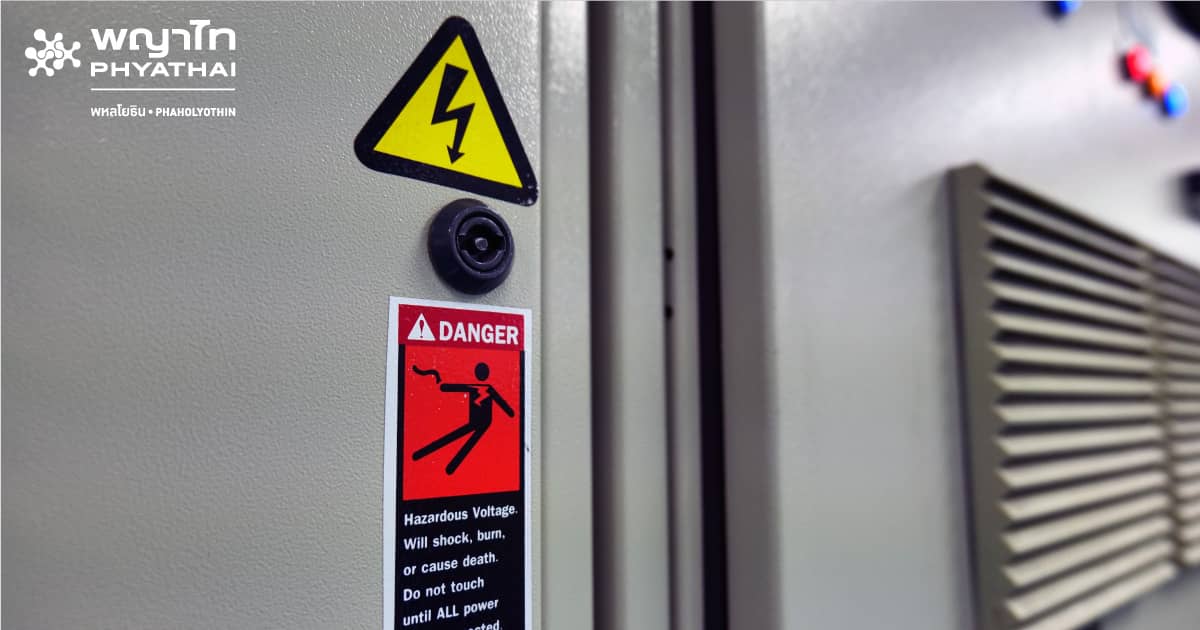
Imagine this! You touch a live wire or an electrical device with your bare hands. What happens is that the electric current flows directly into the body through the point of contact and spreads to various parts of the body, causing damage to cells, tissues, blood vessels, and internal organs. The severity of the symptoms depends on several factors, including the contact location, duration of exposure to the electric current, as well as the type and voltage of the electricity.
How does electric shock or electric current affect the body?
When the body is exposed to electric current, also known as electric shock or electric current injury, the effects can vary. Low current and brief contact may cause numbness or a slight startle without serious harm. However, high voltage or prolonged exposure can cause severe effects such as muscle spasms preventing release of the hand, burns, irregular heartbeat or cardiac arrest, nervous system damage leading to unconsciousness or seizures, and in severe cases, death.
Organs and body systems that may be severely affected by electric shock or electric current injury
- Heart may develop arrhythmia, atrial fibrillation (AF), severe ventricular fibrillation (VF), causing sudden cardiac arrest or asystole (no electrical activity in the heart). Cardiac arrest is often the main cause of death at the scene in electric shock victims.
- Nervous system nerve cells may be damaged, causing injury to the brain and spinal cord, which can result in numbness or paralysis. Early symptoms may include dizziness, nausea, and loss of body control.
- Muscles may experience severe spasms, pain, bruising, or swelling, which can lead to muscle weakness in the future.
- Lungs lung muscles may be damaged, causing difficulty breathing, especially if the electric current passes directly through the chest and lungs. Damage to lung tissue and respiratory muscles can lead to respiratory failure. Without proper rehabilitation, respiratory function may severely decline, increasing the risk of life-threatening complications.
- Kidneys may develop rhabdomyolysis, a severe muscle breakdown condition that affects the kidneys. The release of toxins into the bloodstream can lead to kidney failure. Without timely treatment, severe kidney damage may require dialysis to maintain kidney function.
Proper first aid for electric shock victims and precautions
First aid must consider the safety of both the rescuer and the victim, following these steps:
- Immediately cut off the electrical power and ensure the power is off before assisting the victim.
- If wires are lying on the victim, use non-conductive materials such as dry wood, dry cloth, or rubber hose to push the wires away. Do not touch the victim directly.
- If the victim is in an unsafe area, carefully move them away from the danger zone while avoiding further accidents. If the victim is not in a hazardous area, avoid moving them until professionals arrive.
- Call emergency medical services immediately. While waiting, check the victim’s breathing and heartbeat. If the victim stops breathing, perform CPR.
- If the victim is conscious and has burns, cool the burn immediately with clean tap water for 10-20 minutes.
- Use a clean cloth or gauze to cover the wound to prevent infection and further damage, and wait for medical help. Do not pull off clothing or materials stuck to the wound as this may cause more skin damage.
Comparison of damage assessment methods between electric shock and other heat sources or fire
| Assessment | Electric shock or electric current injury | Fire or other heat sources |
| External wounds | Damage is often not clearly visible; there may be burns or redness at the point of electrical contact. | Damage is usually clearly visible, such as burns or open wounds on the skin. |
| Internal damage | May involve destruction of internal tissues or vital organs such as the heart and nervous system. | May involve internal tissue damage but generally less severe than electric shock. |
| Symptoms | Numbness, muscle pain from spasms, burns, seizures, unconsciousness, or death. | Pain, redness, or swelling at the wound site. |
| Severity | May damage vital internal organs and cause more severe damage depending on the strength, type of current, and duration of exposure. | Heat usually causes skin burns depending on temperature and exposure time. |
Assessment and physical examination after electric shock or electric current injury
After electric shock or electric current injury, a prompt physical examination is necessary to assess symptoms and organ damage for treatment planning and monitoring. The doctor will examine several aspects, including:
- Vital signs and symptoms such as pale face, cold body, excessive sweating, or unconsciousness, which may indicate electric shock. Respiratory and circulatory systems will be checked, including assessment for sudden cardiac arrest and performing CPR if needed.
- Wound and burn examination especially at the entry point of the electric current.
- Nervous system evaluation including nerve and muscle responses, movement, and sensation to detect abnormalities in the central nervous system and spinal cord, such as muscle weakness or paralysis.
- Additional tests to diagnose possible complications, such as
- Electrocardiogram (ECG) to assess heart rhythm abnormalities.
- Cardiac enzyme test to detect heart muscle damage.
- X-ray or CT scan to check for bone or internal organ abnormalities.
- Renal function test (RFT) because electric current may damage muscles and release toxins affecting the kidneys.
- Nerve conduction study (NCS) / Electromyography (EMG) to test nerve and muscle responses.
Long-term health effects to watch for after electric shock
Long-term effects after electric shock may appear later, especially damage to various organs such as heart failure from changes in heart rhythm, arrhythmias, abnormal rapid heartbeat, seizures or paralysis from nervous system damage, muscle spasms, muscle weakness, kidney failure, infections from wounds, and damage to tissues and internal organs. Continuous health care and regular medical check-ups can help prevent complications and ensure timely treatment.
Is it necessary to see a doctor for a mild electric shock?
If the electric shock is mild and there are no abnormal symptoms, immediate medical consultation may not be necessary. However, symptoms should be monitored for 24-48 hours because electricity can affect the heart and nervous system later, especially in high-risk groups such as people with heart disease, young children, the elderly, or pregnant women. They should be examined by a doctor even if no symptoms appear. If symptoms such as dizziness, chest pain, irregular heartbeat, difficulty breathing, muscle twitching, weakness, numbness, or burns at the contact site occur, see a doctor immediately because electricity may affect internal organs even if initial symptoms seem mild.
After electric shock or electric current injury, proper and prompt diagnosis is essential, especially if there are wounds or abnormal symptoms. At Phyathai Phaholyothin Hospital, we have a surgical and wound care center with specialized doctors, advanced technology, and various treatment methods. We also offer rehabilitation services to reduce the risk of complications and help patients regain a good quality of life.
Assoc. Prof. Dr. Preeda Samritpradit
Specialist in Laparoscopic Surgery
Phyathai Phaholyothin Hospital
