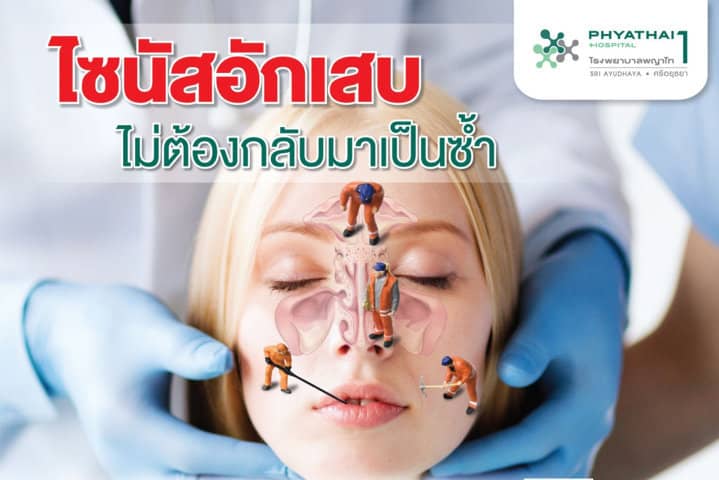
Solving Sinusitis Problems with the Success of Future Treatment Innovations
Innovative Full House FESS
Innovative sinus surgery through endoscopy… towards improved quality of life for chronic sinusitis patients
What is a sinus and why does the body have sinuses?
The sinuses are air cavities located around the nasal cavity, consisting of four pairs: the maxillary sinus (cheek sinus), the ethmoid sinus (near the eyes), the frontal sinus (forehead sinus), and the sphenoid sinus (at the base of the posterior brain). All sinuses have drainage openings into the nose. Therefore, mucus produced inside the sinuses moves out through these drainage openings by the action of cilia cells on the sinus mucosa, preventing mucus stagnation, pus accumulation, and disease. The air cavities in the sinuses help lighten the skull and give our voice a resonant sound.
How does sinusitis occur and is it dangerous?
If pathogens enter the body combined with blockage of the sinus drainage openings or if the mucus produced in the sinuses is very thick and the cilia cells do not function well to clear pathogens and pus from the sinuses, inflammation occurs. This causes symptoms such as swelling, nasal congestion, thick nasal mucus or postnasal drip, reduced sense of smell, and facial pain. This inflammation is called acute sinusitis, which is not chronic. If treated properly, patients will recover normally. However, because the sinuses are located close to the eyes and brain, a small number of patients may develop serious complications, such as pus from the sinuses entering the eyes causing eye bulging, double vision, inability to move the eyes, and blindness, or pus spreading to the brain causing disability and death. If sinusitis symptoms last longer than three months, it is classified as chronic sinusitis. Recent research increasingly shows that chronic sinusitis is chronic inflammation, not chronic infection. For patients with chronic sinusitis caused by eosinophilic inflammation (eosinophilic rhinosinusitis), the inflammation originates from the sinus mucosa itself and may result from various causes such as allergy to airborne fungi, bacterial toxins (staphylococcus enterotoxin B), or abnormal reactions to aspirin. Consequences of chronic sinusitis include asthma, wheezing, loss of smell, or nasal polyps.
Why does chronic sinusitis not improve after taking many antibiotics?
The traditional treatment for chronic sinusitis is prescribing antibiotics that kill pathogenic bacteria. Doctors may collect pus for testing to identify the bacteria type and determine the most effective antibiotic. However, many patients do not improve even after receiving effective antibiotics because chronic sinusitis is not a chronic infection.
Why does chronic sinusitis not improve after using nasal sprays for a long time?
Topical steroid nasal sprays effectively reduce inflammation and newer sprays are safe without systemic side effects. However, research shows that nasal sprays cannot reach the sinus cavities. The latest research published in the Cochrane review journal found that topical steroids are effective only if the medication can reach the sinus cavities.
Why does chronic sinusitis not improve after sinus surgery?
When patients do not improve with medication, surgery is necessary. Early surgeries aimed to drain pus from the sinuses, while later surgeries focused on correcting blockage of the sinus drainage openings to restore normal sinus function. However, eosinophilic chronic sinusitis is not caused by drainage blockage, so these patients may still have nasal polyps, wheezing, thick mucus dripping down the throat, nasal congestion, and loss of smell even after surgery.
Innovative sinus surgery through endoscopy: Innovative Full House FESS
Recently, the International Forum of Allergy and Rhinology published research showing that new understanding of chronic sinusitis has led to changes in sinus surgery techniques. Surgery for eosinophilic chronic sinusitis should not focus on correcting blocked sinus drainage openings as previously thought. The Innovative Full House FESS technique involves endoscopic surgery that not only connects all sinuses to the nose but also widely opens and links all four pairs of sinuses. This prevents thick mucus retention, pus accumulation, hidden fungi that cannot be fully removed, and eliminates the need for repeated surgeries. Topical steroids and saline nasal irrigation can then effectively reach the sinus mucosa to directly reduce inflammation and clear thick mucus from the sinuses.
This innovation includes advanced endoscope technology with high-definition television (HDTV) quality images and surgical instruments that do not damage normal tissue, such as thru cutting forceps and microdebriders, resulting in no nasal mucosa wounds. Additionally, image-guided surgery using CT scans acts like a navigation system for driving, helping surgeons avoid getting lost and reducing the risk of surgical complications. Patients undergoing this innovative surgery do not suffer from nasal packing that causes severe nasal congestion and breathing difficulty after surgery, nor do they experience pain when the packing is removed, unlike in the past.
New techniques and new technology… towards better quality of life for patients
A patient had nasal congestion on both sides and severe wheezing for over ten years. He never sensed any smell. Sometimes he worried about gas leaks and how dangerous it would be not to smell gas for his life and property. Besides thick mucus dripping down his throat, he also coughed and had asthma. Chronic sinusitis made his asthma uncontrollable, and inhalers were ineffective. After medication failed, the doctor recommended sinus surgery. However, after the first surgery using the old technique, he still had severe nasal congestion, thick mucus, and loss of smell. Postoperative examination found scar tissue between his nasal septum and lateral nasal wall on both sides, along with new nasal polyps. Nasal sprays could not penetrate the scar tissue to reach the diseased sinuses. Eventually, he underwent a second surgery using the Innovative Full House FESS technique. The surgeon removed the scar tissue, widely opened his sinuses, and prevented scar formation by using soft silicone. He then rinsed his nose with medicated saline. Now, he breathes freely, has a good sense of smell, and his asthma symptoms have improved, allowing him to reduce oral asthma medications. He still manages his sinuses but mainly uses medicated nasal rinses instead of oral drugs. Therefore, he does not worry about liver and kidney side effects from long-term medication. With these new techniques and technologies, the quality of life for chronic sinusitis patients has improved.
Assoc. Prof. Dr. Korakrit Sanitwong
Specialist in Otolaryngology
Ear, Nose, and Throat Center, Phyathai 1 Hospital
