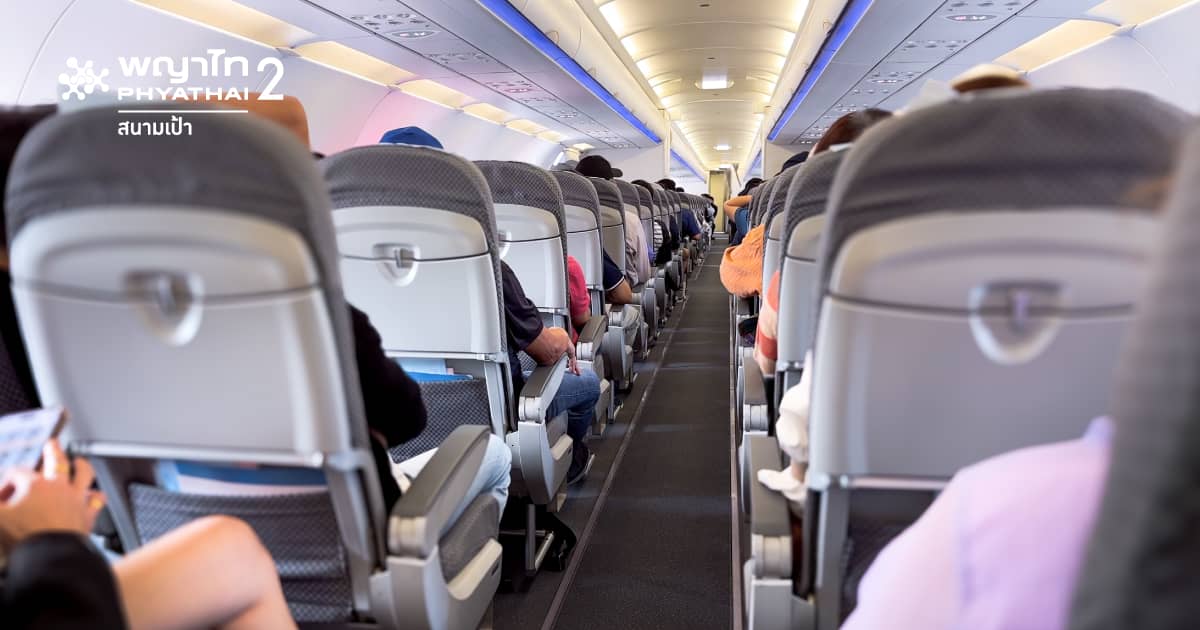
Getting to Know the Condition “Travel-Related Blood Clots”
“Travel-related blood clots” or commonly known as Economy Class Syndrome is a condition where blood clots form in the deep veins (Deep Vein Thrombosis) usually occurring in the legs, especially in people who sit in the same position for a long time, such as during long-distance travel by airplane, bus, or car.
When blood circulation slows down due to prolonged immobility of the legs, the blood may clot and form a thrombus. If the clot breaks loose and travels through the bloodstream to block the pulmonary arteries, it can cause a dangerous condition called Pulmonary Embolism which can be life-threatening.
Causes and Risk Factors
This condition usually results from “stagnant blood flow” combined with “thickened or easily clotting blood” with risk factors to watch out for including
- Sitting in the same position for more than 4 hours without moving the legs
- Age 40 years and older
- Obesity
- Smoking
- Pregnancy or recent childbirth
- Users of contraceptive pills or hormone replacement therapy
- Having underlying diseases such as heart disease, cancer, or a history of blood clots
- After major surgery, especially bone or joint surgery
Symptoms to Watch For
These symptoms are considereda medical emergency and require immediate hospital visit People with deep vein thrombosis may experience the following symptoms
- Pain, tightness, or swelling in the calf or leg
- Redness or warmth of the skin in that area
- Feeling of heaviness in the leg or difficulty walking
If a blood clot breaks loose and blocks the lungs, additional symptoms may include
- Shortness of breath, sudden chest pain
- Dizziness or loss of consciousness
How to Prevent “Economy Class Syndrome” During Long-Distance Travel
Although this condition is dangerous, it can be prevented by adjusting behavior during travel as follows
- Move your legs and feet regularly Get up and walk every 1–2 hours if on a plane If you cannot get up, move your ankles, rotate your ankles, stretch your legs, or tense your calves frequently to help improve blood circulation
- Drink enough water Avoid beverages containing caffeine or alcohol as they may cause dehydration and thicken the blood
- Do not cross your legs for long periods Sitting with crossed legs reduces blood flow in the legs
- Wear comfortable, non-restrictive clothing Choose clothes and shoes that are not too tight to avoid restricting blood flow
- Use medical compression stockings (Compression Stockings) For those at high risk, such as the elderly, people with a history of blood clots, or recent surgery patients, special stockings may help stimulate blood circulation
- Consult a doctor before traveling If you have underlying diseases or are in a risk group, consult a doctor before traveling to assess the risk and consider the use of anticoagulant medication in some cases
Travel-Related Blood Clots are preventable if you are aware and adjust your behavior accordingly, especially for those who travel long distances regularly. You should frequently move your body, drink enough water, and always monitor for any abnormal symptoms
If you have risk factors for blood clots or suspect symptoms after long-distance travel
such as swelling, calf pain, or difficulty breathing after travel you should see a doctor for evaluation promptly to prevent potentially life-threatening complications at Phyathai 2 Hospital we are ready to care for you with a specialized medical team, advanced diagnostic technology, and comprehensive care
