Lung cancer is one of the serious diseases that claims the lives of Thai people and people worldwide at a high rate, ranking among the top causes, especially in groups who smoke or are regularly exposed to pollution. This disease often does not show clear symptoms in the early stages, causing many to mistakenly think it is just a common cough or general respiratory illness. By the time they realize, the disease may have already progressed significantly.
This article will take you to understand lung cancer from all aspects, including causes, warning signs, risk groups, differences from pulmonary tuberculosis, to necessary diagnostic tests, so that you and your loved ones can monitor, be aware, and receive timely treatment.
What is Lung Cancer?
Lung cancer (Lung Cancer) is a disease caused by abnormal and uncontrollable growth of cells in the lung tissue, leading to the formation of cancerous tumors, which can rapidly spread to lymph nodes, brain, bones, or other organs. Lung cancer is divided into 2 main types:
- Non-Small Cell Lung Cancer (NSCLC) accounts for up to 85% of patients. It grows slowly but can spread if untreated.
- Small Cell Lung Cancer (SCLC) accounts for about 15% of patients. It grows and spreads very quickly, often found in heavy smokers.
This disease is classified as a cancer with a high mortality rate because it often does not show symptoms until it has reached an advanced stage.
Warning Signs of Lung Cancer
Symptoms of early-stage lung cancer may be unclear, causing many patients to neglect or mistake them for common respiratory illnesses. These symptoms should be promptly diagnosed by a specialist. Common warning signs include:
- Chronic cough, especially if it lasts longer than 3 weeks without improvement
- Coughing up blood or blood-streaked sputum or changes in sputum characteristics
- Shortness of breath or difficulty breathing, especially when climbing stairs or with slight exertion
- Chest pain or tightness or discomfort in the chest area
- Chronic hoarseness without a clear cause
- Loss of appetite and unintentional weight loss
- Frequent respiratory infections such as pneumonia or recurrent bronchitis
Causes and Risk Factors of Lung Cancer
The main cause of lung cancer is continuous exposure to carcinogens, causing mutations in lung cells that turn into cancer cells. Important risk factors include:
- Smoking is the highest risk factor. More than 80-90% of lung cancer patients have smoked or been exposed to secondhand smoke (Passive smoking)
- Secondhand smoke, even if not smoking directly, being in an environment with smokers increases the risk significantly.
- Occupational exposure to toxins such as asbestos, (Asbestos), radon (Radon), arsenic, chromium
- Air pollution such as PM2.5 dust, especially in big cities
- Genetics and family history, if someone in the family has had lung cancer, the risk increases
- Certain infections such as tuberculosis or certain fungi that cause chronic lung lesions may develop into cancer
Who is at Risk of Lung Cancer?
Lung cancer can occur in anyone, but there are specific risk groups that should be closely monitored.
- Current or former smokers regardless of duration
- Family members of smokers or those working closely with smokers
- Workers in industries with toxic substances such as mining, steel factories, chemical industries
- People aged 50 years and older, especially males
- People with chronic lung diseases such as tuberculosis or chronic obstructive pulmonary disease (COPD)
Differences Between ‘Lung Cancer’ and ‘Pulmonary Tuberculosis’
Many people may confuse lung cancer with pulmonary tuberculosis because both have chronic cough symptoms, but the two diseases have clear differences as follows:
| Characteristic | Lung Cancer | Pulmonary Tuberculosis |
| Cause | Cell mutation | Bacterial infection Mycobacterium tuberculosis |
| Spread | Spreads from lungs to other organs | Spreads through airborne droplets |
| Main symptoms | Chronic cough, coughing blood, weight loss, hoarseness | Chronic cough, low-grade fever in the evening, night sweats |
| Treatment | Chemotherapy, radiation therapy, surgery | Specialized antibiotics for 6–12 months |
| Contagiousness | Not contagious | Contagious through airborne droplets |
If symptoms are similar, detailed diagnosis is necessary to differentiate the diseases.
When lung cancer is suspected, doctors will perform various diagnostic steps to confirm and stage the disease, including:
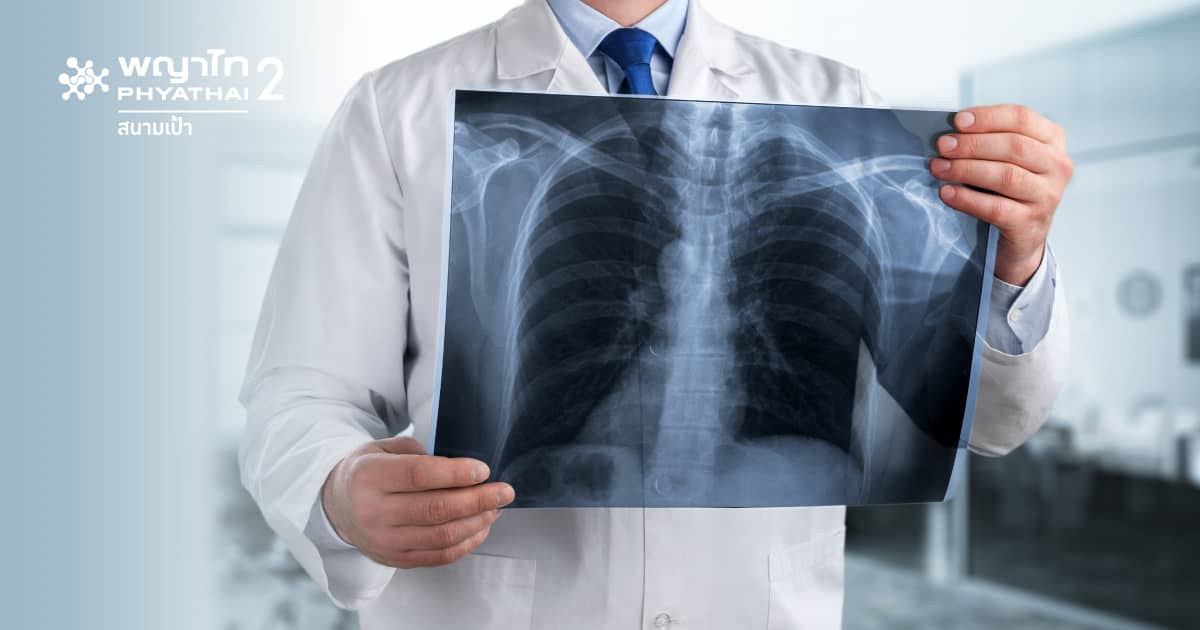
- Chest X-ray as an initial test to look for abnormalities
- CT Scan (Computed Tomography) to check the location, size, and spread of the tumor
- PET Scan to check if the cancer has spread to other parts of the body
- Sputum examination to detect cancer cells in the sputum
- Bronchoscopy (Bronchoscopy) to obtain tissue for pathological examination
- CT-guided biopsy (CT guided Biopsy) to identify the type of cancer cells for treatment planning
- Genetic testing (Genetic Testing) such as EGFR, ALK, ROS1, PDL-1 for planning targeted therapy(Targeted Therapy)
Lung cancer is a serious disease that is often detected late because symptoms are usually unclear in the early stages. Regular health check-ups and awareness of risk factors can help enable timely diagnosis and treatment.
If you or someone close to you has an unexplained chronic cough, difficulty breathing, or a history of exposure to risk factors, you should promptly see a respiratory or lung cancer specialist for a detailed diagnosis.
Dr. Chanathat Traithong
Pulmonologist and Respiratory Critical Care Specialist
Phyathai 2 Hospital
