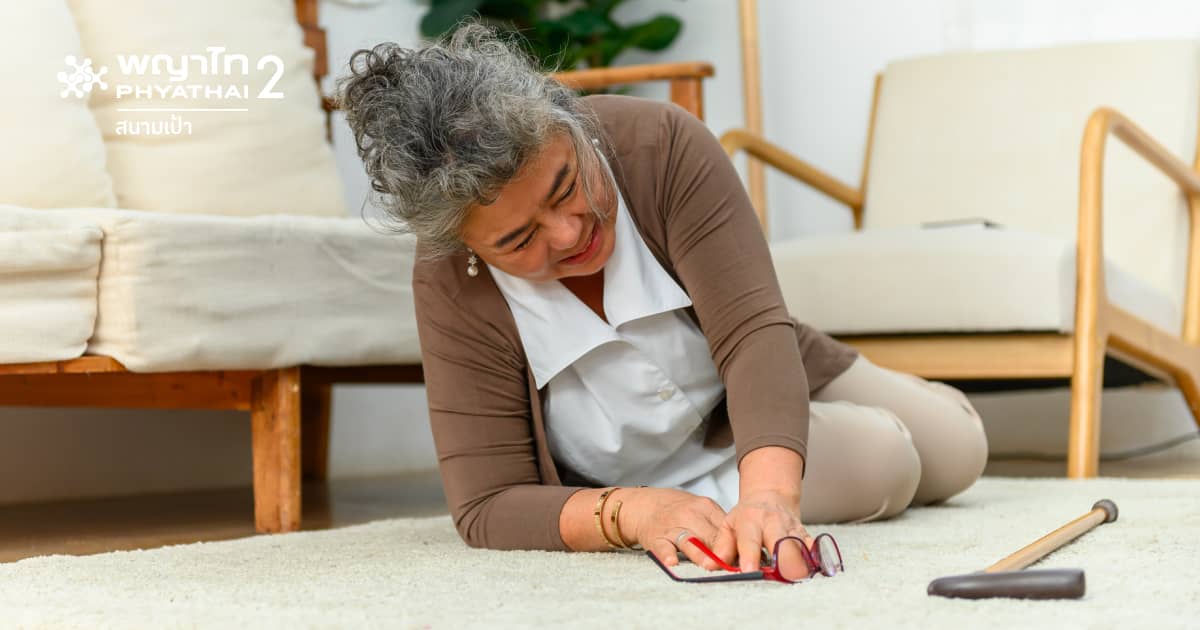
Although bones are the strongest organs in the body, as we age, the body deteriorates including the bones. Bone-related health problems often progress gradually without the patient realizing it, such as “osteoporosis,” which is a silent threat that many overlook. By the time it is discovered, it is often after a fall resulting in a fracture.
Currently, Thailand has fully entered an aging society, causing the incidence of osteoporosis to increase significantly. However, if we have a good understanding of this disease, we will be better prepared to cope by preventing and managing the deterioration as much as possible.
‘Dr. Poonphong Huttachok, a specialist in diabetes, endocrinology, and metabolism at Phyathai 2 Hospital,’ stated that osteoporosis is a disease where bone mass decreases, leading to reduced bone density and resulting in bone weakness. Generally, bones are the strongest organs in the body, but when osteoporosis occurs, causing a decrease in bone density, bones become more fragile and break more easily than normal.
Causes of Osteoporosis
Osteoporosis can occur naturally with aging. Women are at higher risk starting at age 65 and above, while men typically begin around age 70.
However, osteoporosis can also be caused by other factors such as taking certain medications like blood thinners, some types of stomach medications, or long-term use of anti-seizure drugs. Additionally, some diseases can lead to secondary osteoporosis, such as diabetes or rheumatoid arthritis.
Are Teenagers at Risk of Osteoporosis?
Generally, teenagers aged 12-15 have not yet reached their peak bone mass. People accumulate bone strength from childhood, with peak bone density occurring between ages 20-30. Therefore, children or teenagers can be at risk of osteoporosis due to severe injuries, insufficient calcium intake, or inadequate vitamin D, resulting in weaker bones during adolescence. Hence, choosing a proper diet should not be overlooked.
Preventing Osteoporosis with Proper Nutrition
Preventing osteoporosis by consuming an appropriate amount of calcium should correspond to age. For teenagers, accumulating bone mass is very important, requiring a relatively high calcium intake of about 1,200 milligrams per day. In adulthood, this decreases to about 800 milligrams per day.
In the elderly, bones break down and lose calcium more than in other age groups. Calcium intake alone may not be sufficient to build bones. Elderly people should also get vitamin D because calcium absorption is minimal or incomplete without vitamin D. Therefore, elderly individuals should consume milk, egg yolks, certain mushrooms such as shiitake and shiitake mushrooms, as well as vegetable oils to obtain vitamin D. For calcium, they can choose to eat small fish that can be eaten with bones, canned fish with soft bones (but be cautious of bones), firm tofu, and black sesame seeds.
Preventing Osteoporosis through Exercise
Bones become strong only when subjected to appropriate pressure. Lying still, especially bedridden patients who rarely move and have no pressure on joints or bones, lose bone mass faster than normal. To prevent osteoporosis through exercise, a variety of forms should be practiced as follows:
1. Exercises that apply pressure on joints or bones such as fast running, jogging, brisk walking, cycling, Tai Chi, and sports like basketball and football, which help strengthen bones.
2. Exercises to build muscle mass As people age, muscle mass decreases similarly to bone mass. Strengthening exercises help muscles support bones better, reducing the risk of fractures from osteoporosis.
3. Exercises to improve balance which help prevent falls, such as alternating leg lifts to improve stability.
However, exercise should not be excessive. Regarding whether daily exercise overworks the bones, age and any contraindications to exercise should be considered. Consulting a doctor for appropriate advice is recommended. For young people without underlying diseases, exercise helps strengthen bones and reduces the risk of osteoporosis later in life.
Does Excessive Exercise Affect Osteoporosis?
Intense exercise may cause muscle inflammation or tears, and joints may wear out faster due to impact. It has also been found that those who exercise intensely for long periods, such as female national athletes who train hard, have an increased indirect risk of estrogen deficiency, leading to amenorrhea for over a year. This results in bone thinning and osteoporosis as they age.
Therefore, exercise to prevent osteoporosis should be moderate—not too little to be ineffective, nor too much to cause harm. Choose exercise types suitable for age, health conditions, and existing diseases.
Preventing Osteoporosis by Avoiding Risky Behaviors
- Reduce alcohol consumption
- Quit smoking
- Avoid daily consumption of soft drinks or drinking more than 3 cups of coffee per day
Osteoporosis Can Be Detected Early with a DXA Scan
Women aged 65 and above and men aged 70 and above should undergo osteoporosis screening using a DXA Scan, a radiological examination that takes about 15-30 minutes. The DXA Scan measures bone density in the spine and hip. If the hip or spine cannot be scanned due to surgery with metal implants or other reasons, bone density can be measured at the wrist instead. After the scan, a T-Score is provided to assess osteoporosis as follows:
- T-Score greater than -1 indicates normal bone
- T-Score between -1 and -2.5 indicates osteopenia, meaning bone thinning with increased risk of osteoporosis but not severe
- T-Score below -2.5 indicates osteoporosis with a high risk of fractures. Annual DXA Scans are recommended for monitoring
- T-Score below -2.5 with fractures indicates severe osteoporosis
Understanding osteoporosis early is the best aid for prevention and treatment.
Regular milk consumption in appropriate amounts combined with continuous exercise from childhood provides a good foundation for bone development during that period. After age 30, bone mass naturally decreases. Having a higher bone mass and stronger bones reduces the risk of severe osteoporosis in old age. Importantly, do not forget to get a DXA Scan to truly know your bone condition.
