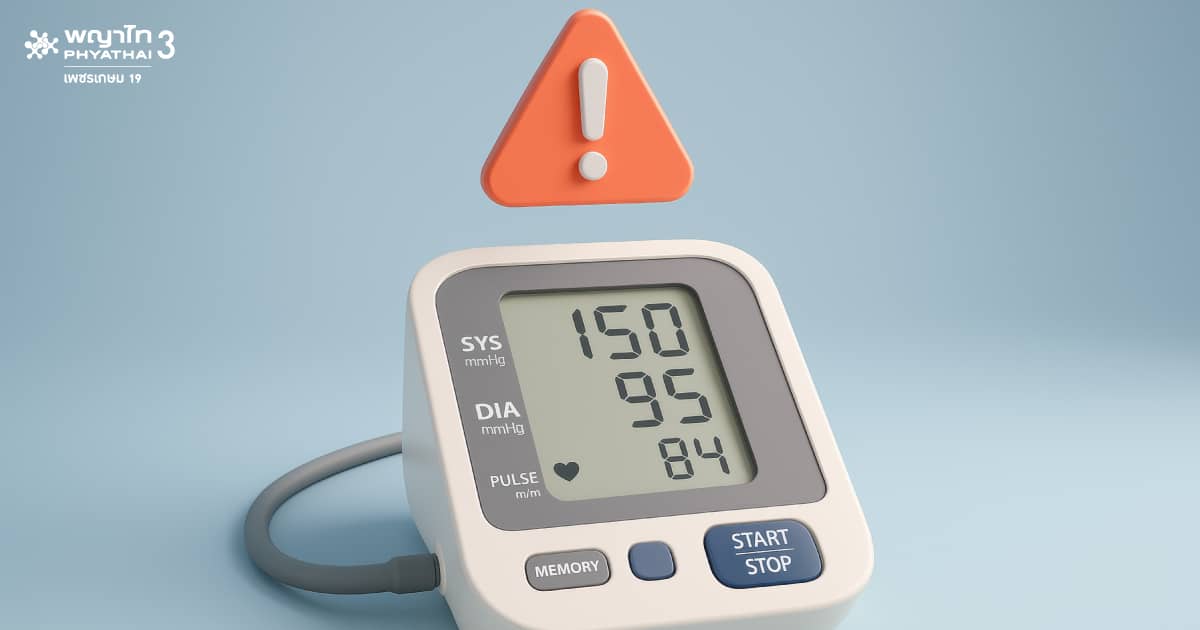
“The higher… the colder” Many people have probably heard this phrase often, but today we bring this phrase to talk about health. Because today we will talk about high blood pressure, a silent hidden danger that we may have without knowing it. And let me tell you, the higher the blood pressure, the colder it gets, because various diseases are lined up to come to us even though we don’t want to welcome them.
What is blood pressure?
Blood pressure is caused by the pressure from the heart pumping blood to nourish the entire body. It is divided into systolic blood pressure (the upper number), which is the blood pressure when the heart contracts, and diastolic blood pressure (the lower number), which is the blood pressure when the heart relaxes.
What blood pressure level qualifies as high blood pressure?
Normal blood pressure levels are when the systolic pressure is below 120 and the diastolic pressure is below 80 millimeters of mercury. Blood pressure that is somewhat high but still within the normal range is 130-139/85-89 millimeters of mercury (mm/Hg). Blood pressure that qualifies as high blood pressure is systolic pressure ≥ 140 and diastolic pressure ≥ 90 millimeters of mercury (mm/Hg).
Sodium lovers who like salty food must beware of high blood pressure
Because eating salty food increases the amount of sodium in the body. When the sodium level in the body increases, it causes more water to be absorbed into the bloodstream, which results in increased blood pressure.
What causes high blood pressure?
Most commonly found is essential hypertension, which has no known cause, especially in people with a family history of high blood pressure or older age. Secondary hypertension, which has a known cause, is often found in people with other conditions such as kidney disease, renal artery stenosis, certain vascular diseases, adrenal gland disorders, some tumors, preeclampsia, sleep apnea, and the use of certain medications.
How dangerous is high blood pressure?
This disease is called a silent threat because sometimes it does not show clear symptoms but affects various systems in the body, especially the cardiovascular system. It is one of the factors leading to coronary artery disease, thickening of the heart muscle, heart failure, aortic aneurysm, chronic kidney failure, damage to the blood vessels supplying the retina causing retinal degeneration, and it can also lead to stroke and paralysis.
Can high blood pressure be completely cured?
Once you have this disease, it cannot be completely cured. The best treatment is lifestyle modification combined with closely following the doctor’s advice, including
- Controlling diet by reducing salty and high-fat foods
- Exercising regularly at least 3-5 times a week, 30 minutes each time
- Avoiding alcohol and smoking
- Maintaining a normal weight
- Taking medication as prescribed by the doctor strictly and regularly following up on treatment results
Regarding medication for high blood pressure, there are currently many types of blood pressure control drugs, each with different mechanisms of action. Each person responds differently to each type of medication, so medication use should be closely monitored by a doctor.
High blood pressure is therefore not something to be overlooked. Although the symptoms may not be very severe, the side effects inside the body are more dangerous than we think.
Dr. Jutatip Petchrat
Cardiologist, Heart Center
Phyathai 3 Hospital
