The human body consists of various organs that can function to sustain life. These organs receive nutrients and oxygen from the arteries for nourishment and remove waste products from their processes through the veins. If these blood vessels become abnormal, it may lead to subsequent problems.
When Arteries and Veins Are Abnormal
Arterial abnormalities arise from two causes: Arterial aneurysm or arterial insufficiency. The danger of arterial aneurysm diseases is that when an aneurysm reaches a certain point, it ruptures from the arterial wall that has stretched and thinned. The disease stages range from the initial aneurysm formation to rupture and may or may not show symptoms. Symptoms include pain at the aneurysm site due to rapid arterial expansion or blockage of the aneurysm caused by abnormal blood flow turbulence in that area, leading to blood clots.
Arterial Aneurysm: Risks and Treatment
- Degeneration of the arterial wall with age combined with smoking
- Men aged 65 and older who smoke should undergo screening for abdominal arterial aneurysm
- Treatment involves abdominal ultrasound or disease monitoring to prevent life-threatening rupture of abdominal arterial aneurysm
Arterial Insufficiency: Symptoms and Treatment
- Symptoms appear in the organs supplied by the affected artery, such as leg ischemia from arterial blockage
- Calf pain when walking (claudication) at a consistent distance each time the patient starts walking, noticeable to the patient
- Chronic foot ulcers caused by ischemia, which are painful and sometimes severely painful at night, causing insomnia (rest pain). Most patients appear debilitated when visiting the doctor due to prolonged sleep deprivation
- Leg ischemia from arterial blockage, if untreated properly, may lead to limb loss or disability
- Treatment involves catheter-based surgery, which allows faster recovery and more effective results (vascular surgeons will consider treatment based on the characteristics of the affected vessels and the suitability for each patient)
Venous abnormalities occur from chronic venous insufficiency and venous thromboembolism.
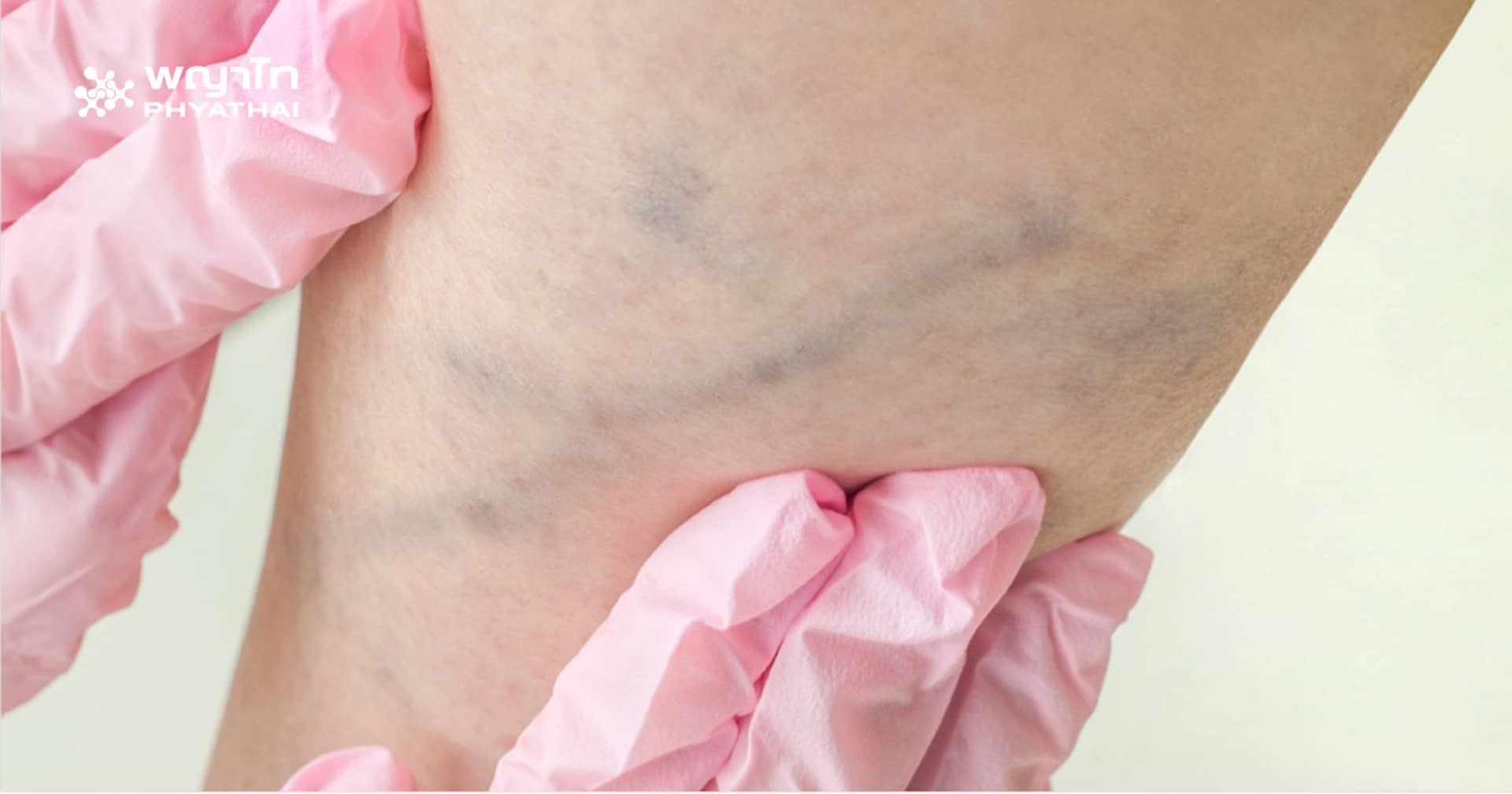
Chronic venous insufficiency is when the veins cannot efficiently return blood from the legs to the heart and lungs due to valve degeneration in the vein walls. This causes waste accumulation from muscle activity in the legs, leading to pain, calf fatigue when standing for long periods, cramps, heavy legs, leg swelling, or chronic leg ulcers. This condition often results from prolonged standing work and obesity, more commonly found in women.
How to Treat Chronic Venous Insufficiency
- Weight reduction
- Wearing graduated compression stockings
- Medications to strengthen the veins
- Catheter-based surgery using RFA (Radiofrequency ablation), which allows same-day discharge and shorter recovery time compared to traditional surgery
Venous thromboembolism is a condition where blood clots block large veins, causing blood pooling in the legs and swelling. Causes include abnormal blood clotting disorders, prolonged immobility, injury to the affected veins, or long-term use of oral contraceptives. The danger of venous thromboembolism is that the clot can dislodge, travel through the bloodstream, and block pulmonary arteries, disrupting oxygen gas exchange and potentially causing life-threatening complications.
Treatment for Venous Thromboembolism
- Anticoagulant therapy combined with prevention of post-thrombotic syndrome; the duration depends on the cause and individual response to treatment
- Primarily wearing graduated compression stockings
- Creation of arteriovenous fistula by vascular surgeons for chronic kidney failure patients requiring dialysis to replace lost kidney function
The best option for treating venous thromboembolism is creating a dialysis access from the patient’s own blood vessels (arteriovenous fistula) because it is more durable and reduces infection risk compared to synthetic grafts (arteriovenous graft). However, in some patients with small native vessels, synthetic grafts may be considered based on individual patient conditions.
