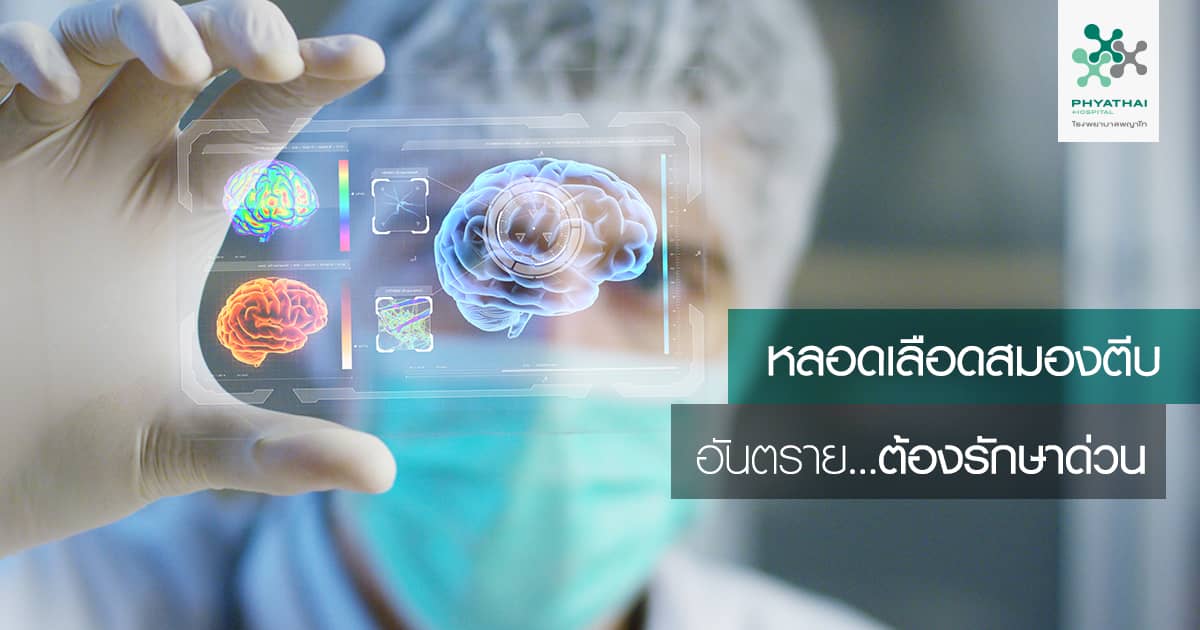
Stroke or cerebrovascular disease is caused by narrowed, blocked, or ruptured brain blood vessels, resulting in insufficient oxygen supply to the brain, leading to brain ischemia. Once the brain lacks blood, brain cells gradually get damaged, causing loss of brain function, which can result in hemiparesis, paralysis, or death.
Stroke or cerebrovascular disease is divided into 2 types
- Ischemic Stroke occurs due to the accumulation of fat or calcium deposits on the inner walls of blood vessels, gradually narrowing or constricting the vessels, reducing blood flow efficiency. It can also be caused by the rupture of fatty plaques on the vessel walls, leading to blood clots that cause vessel blockage.
- Hemorrhagic Stroke occurs when a blood vessel wall ruptures, immediately cutting off blood supply to brain cells, directly affecting brain tissue. Within a short time, brain tissue dies, often resulting in rapid death. This condition is common in patients with high blood pressure, aneurysms, liver disease, and blood disorders.
Key risk factors for Stroke
- High blood pressure
- High blood cholesterol
- Diabetes
- Obesity
- Smoking
- Stress
- Heart disease patients with abnormal blood circulation, causing blood clots to block the brain
- People who sit in cars or airplanes for long periods, causing poor blood circulation and blood clot accumulation around the knees
Acute signs!! Indicating you are having a Stroke
Stroke or cerebrovascular disease is a condition where “time” is critical for saving life, unlike other diseases that show abnormal symptoms and can be managed or controlled. Stroke usually occurs suddenly with the following symptoms:
- Weakness in arms or legs, unsteady walking, loss of balance
- Facial drooping, slurred speech, inability to speak, weakness on one side of the face
- Vision problems, double vision, or seeing only half of the visual field
- Confusion or severe headache unlike any experienced before
Although some patients may improve within 24 hours due to transient ischemic attack, patients and relatives should not ignore these signs as they may be early warnings of Stroke that require urgent medical treatment! Mobile CT & Stroke Treatment Unit: Mobile CT & Stroke Treatment Unit
After Stroke signs appear, go to the hospital immediately!
Since Stroke is an acute condition, once symptoms appear, relatives or close persons must take the patient to the hospital as quickly as possible. Stroke treatment requires diagnosis to distinguish between hemorrhagic and ischemic stroke as soon as possible. If the patient has a hemorrhagic stroke, surgery must be performed urgently. If the patient has an ischemic stroke, the blood vessel must be reopened as quickly as possible. The patient must receive clot-dissolving medication within 4.5 hours. If this time window is missed or the medication is ineffective, doctors will choose the appropriate treatment to reduce paralysis and increase survival chances, as follows:
- Intra Arterial Thrombolysis: For patients arriving later than 3 hours but within 6 hours, or with large clots where intravenous thrombolysis is ineffective, doctors will insert a catheter through an artery to the clot and deliver medication directly to dissolve it.
- Clot Retrieval: For patients arriving late but within 8 hours, doctors will insert a catheter through the femoral artery to the clot location, then use a special small coil to capture and remove the clot.
- Carotid Stenting: For patients with ischemic symptoms and more than 50% vessel narrowing who cannot undergo surgery, doctors will use a stent to expand the artery from the groin or armpit area. This procedure takes about 1-2 hours and is available only at medical schools and large private hospitals.
How to take care of yourself to prevent recurrent Stroke?
Since Stroke can recur, patients must take good care of themselves to prevent a second stroke. This includes managing chronic diseases, taking medication regularly, attending medical appointments, getting enough rest, exercising regularly, and avoiding risky behaviors such as avoiding high-fat foods, salty foods, alcohol, and smoking.
