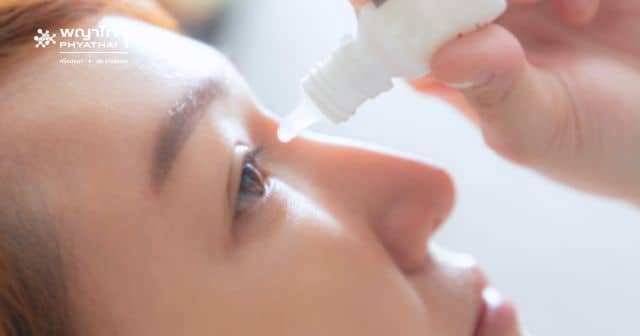
Medications for eye diseases are often in the form of ‘eye drops,’ creams, or gels, which come into direct contact with the eyes. This results in the highest concentration of the medication at the front part of the eyeball. Such medications have the advantage of reducing systemic side effects that may occur. The difference between the tear fluid, which is concentrated with the drug, and the eye tissues facilitates drug absorption through the cornea, and dry conjunctiva also enhances this absorption.
Amount of Eye Drops Remaining in the Eye
Normally, the volume of eye drops on the market is approximately 50 microliters per drop, while the volume of the tear meniscus in a normal person sitting and blinking is about 7-10 microliters. Therefore, only about 20% (10 microliters/50 microliters) or one-fifth of one drop of the eye drop remains in the eye. Even under normal conditions, other factors affect the retention of the drug, such as the tear fluid turnover in the tear meniscus, which occurs at 16% per minute, and this turnover rate increases when tears are produced due to irritation.
The duration that the drug remains in the tear reservoir and tears is called the ‘drug retention time,’ which is related to the drug formulation, other eye drops used afterward, as well as natural tear production and drainage.
Absorption of Drug in Eye Drops and Interval Between Eye Drop Applications
Slowly absorbed eye drops will have only 50% or half of the drug remaining in the tear meniscus, which equals 10% of the initial drug amount (50% of 20% of the applied drug). This amount remains in the tear meniscus for only 4 minutes after instillation and decreases to 17% or 3.4% of the initial drug after 10 minutes.
Therefore, patients using more than one type of eye drop should wait about 5 minutes between drops to prevent the first drug from being washed out by the subsequent drops. Additionally, blinking reduces drug efficacy by stimulating tear absorption from the lacrimal sac into the nasal cavity, causing negative pressure in the lacrimal sac and emptying the tear meniscus.
What to Do When Tears Flow After Instilling Eye Drops?
There are two ways to avoid losing the drug in the tear meniscus: 1. pressing the inner corner of the eye with a finger, and 2. closing the eyes for 5 minutes after each drop. Both methods help to
- prevent loss of the drug in the tear meniscus
- reduce systemic side effects by decreasing drug absorption through the nasal mucosa
- increase local absorption of the eye drops used
The duration that the drug remains in the tear reservoir and the time the drug contacts the eye can be prolonged by increasing the viscosity of the solution or using drug delivery vehicles such as contact lenses, collagen shields covering the cornea, and special devices placed in the conjunctival sac.
Water-soluble drug particles or molecules that are small in size can penetrate the conjunctiva about 20 times more than the cornea. The conjunctiva surrounding the cornea is an important site where drugs can effectively penetrate the sclera into the anterior structures of the eyeball. There are nine factors affecting drug penetration into the cornea, including:
- Appropriate drug concentration and solubility in the carrier
- Viscosity of the drug
- Drug’s ability to dissolve in lipids
- pH of the drug
- Charge and branching at various positions of the drug molecule
- Particle size of the drug
- Chemical structure and composition of the drug
- Carrier
- Surfactants
What Causes Reduced Penetration of Eye Drops?
Reduced penetration occurs due to tears produced by irritation, binding of active drugs to proteins in tears and tissues, which affects drug bioavailability or the “proportion of the drug” entering the systemic circulation, which transports the drug to the site of action.
Preservatives used in many eye drops are surfactants, which can alter the barrier of the corneal epithelium and help increase drug penetration into the cornea.
Proper Use of Eye Drops and Eye Ointments
- Always review the doctor’s instructions before using the medication
- Check the drug name, expiration date, cleanliness, condition of the bottle or tube, including the tip, which should not be cracked or chipped
- Wash hands thoroughly
- Lie on your back or tilt your head back to the ceiling, use the non-dominant hand to pull down the lower eyelid, and use the dominant hand to hold the bottle or tube
- Instill 1 drop into the conjunctival sac without letting the tip of the bottle touch the eye, fingers, eyelashes, or the area around the eye to prevent contamination of the medication bottle
- After instilling the drop, press the inner corner of the eye with your index finger or close your eyes gently for 5 minutes
- Use tissue paper, cotton, or a clean cloth to wipe away excess medication that contacts other skin areas such as the upper eyelid, lower eyelid margin, eyelashes, or skin around the eyes. For eye drops that are not artificial tears or are chemical substances, use tissue paper, cotton, or a damp cloth wrung dry to clean the area thoroughly
- For eye ointments, follow steps 3 and 4 by applying the ointment into the conjunctival sac. If using eye drops at the same time, apply the drops first, wait 5 minutes, then apply the ointment
- If using more than one type of medication, wait at least 5-10 minutes between each type
- Always close the bottle or tube tightly after use. Do not rinse the tip before closing, and store the medication in the refrigerator as instructed
- Wash hands after instilling or applying medication
- If wearing contact lenses, remove them before instilling the medication. After instillation, wait 15 minutes before reinserting the contact lenses as usual
