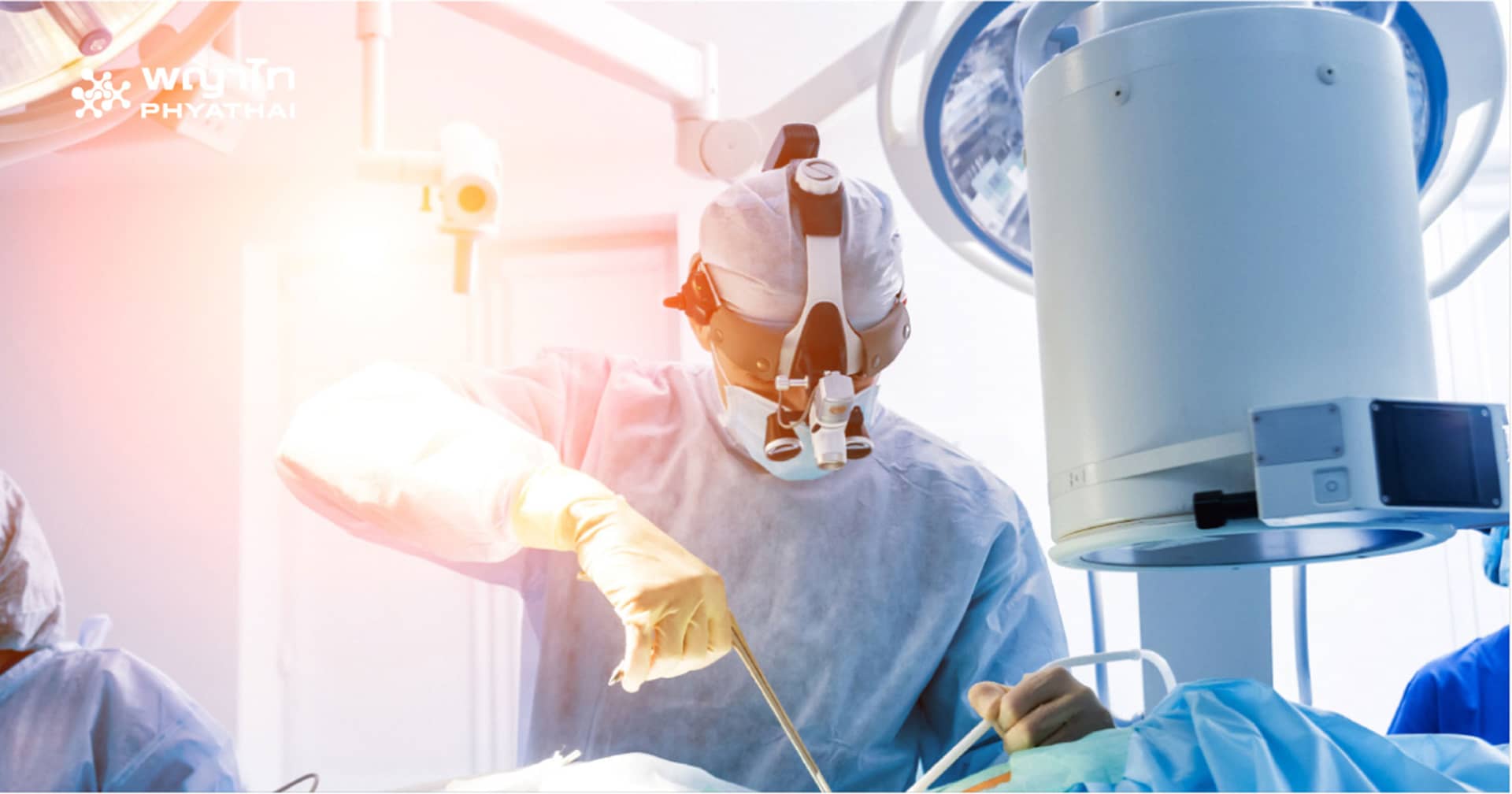
Currently, spinal surgery technology has developed from the past in terms of wound size, patient pain, safety, and hospital stay duration. In the past, spinal surgery was performed through open surgery, which is a major surgery involving extensive muscle dissection. This caused significant surgical wound pain and required a longer hospital stay before patients could walk. Nowadays, we have endoscopic surgery technology, which helps surgeons perform safer surgeries with smaller wounds and less muscle dissection, allowing patients to walk sooner.
Microscope and Endoscope Surgery
Currently, there are several types of cameras used in spinal surgery. It is similar to taking photos with a handheld camera versus a professional camera; the image quality we see is different. Likewise, regardless of the type of camera surgeons use in spinal surgery, it can be said that all surgeries are performed through a camera. There are two types of cameras used in spinal surgery today:
- Microscope is a microscope that magnifies the image in the surgical area, making the surgical wound smaller compared to traditional open surgery in the past. However, it is still necessary to make an incision of about 3 centimeters and dissect some muscle tissue.
Characteristics of the Microscope: Surgeons view a magnified image of the surgical area using a microscope and perform surgery through a normally opened wound. Sometimes, it is necessary to remove part of the facet joint to clearly see the surgical area. This may result in spinal instability and an increased chance of epidural fibrosis. The typical hospital recovery period after surgery is 3-5 days.
After the introduction of the microscope in spinal surgery, there was an invention to further reduce the wound size. This method is a hybrid between Microscope and Endoscope surgery, called Micro endoscope.
Micro endoscope uses a Microscope combined with a tubular retractor, reducing the wound size to about 2 centimeters and minimizing muscle dissection.
- Endoscope is a further advancement used in spinal surgery. The difference between Microscope and Endoscope is that the Endoscope involves inserting a small camera into the patient’s body. Surgeons can clearly see the patient’s organs and reduce the wound size to 0.8 – 1 centimeter without the need to dissect muscles as in other surgeries. Surgeons can insert instruments through the camera to perform surgery while viewing a monitor displaying images from the camera inside the patient. Endoscopic surgery requires extensive training, special courses, and multiple supervised surgeries to ensure safety and treatment outcomes comparable to open surgery. The results of Endoscopic techniques show reduced tissue and muscle injury, leading to less postoperative pain. Patients can recover quickly, moving, sitting, and walking the next day after surgery, which shortens hospital recovery time. The typical hospital stay after endoscopic surgery is 1 – 3 days.
